Prompt Engineering for Developers: The Complete Guide to Building Better AI Applications
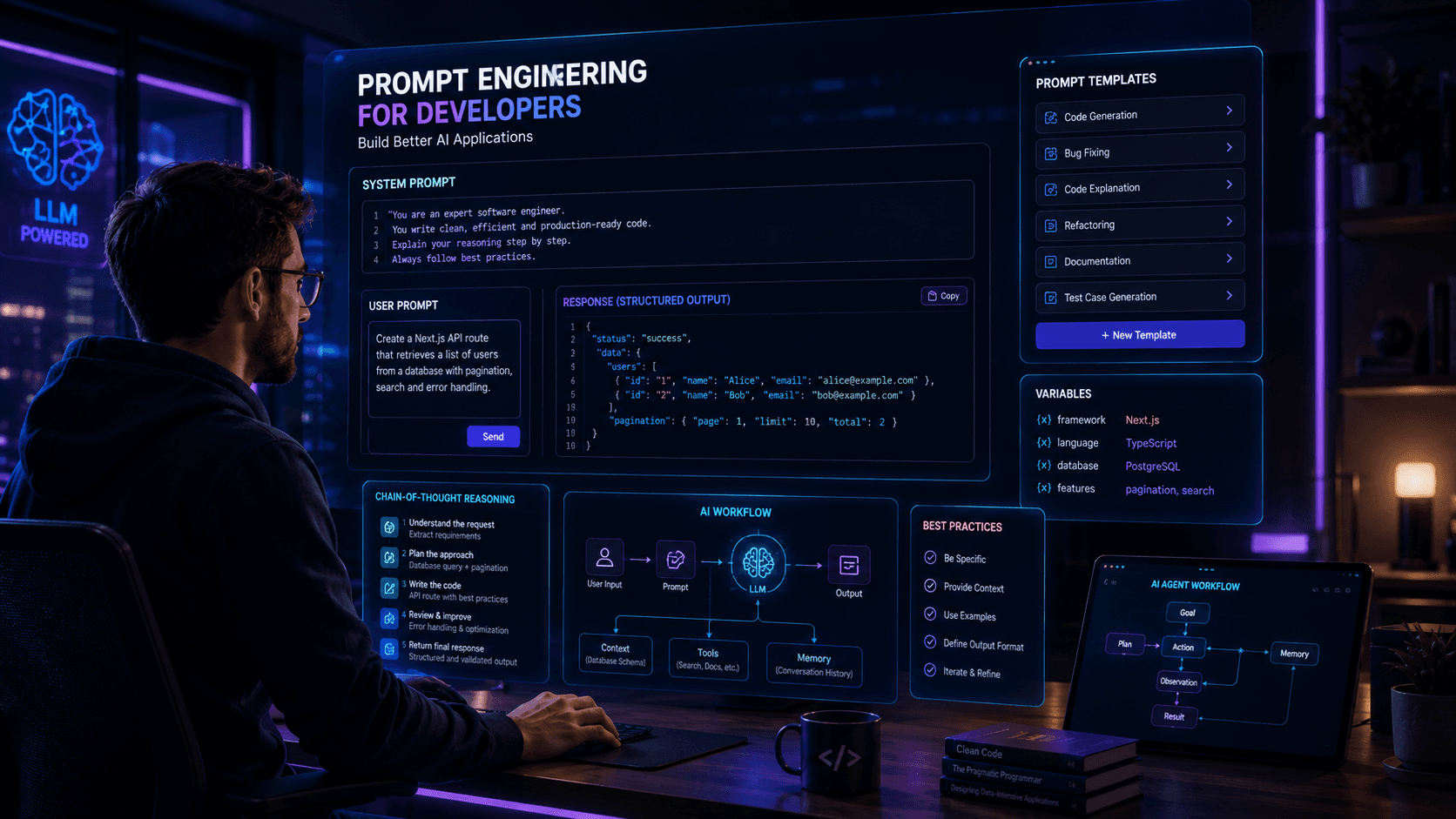
Prompt engineering is one of the most important skills for AI developers. Learn proven techniques for building more accurate, reliable, and production-ready AI applications.
Artificial Intelligence models have become incredibly powerful, but their output quality depends heavily on one thing:
The prompt.
Two developers can use the same AI model and receive completely different results simply because one understands prompt engineering while the other does not.
Prompt engineering has become a critical skill for developers building AI-powered applications, chatbots, agents, and automation systems.
In this guide, you'll learn how prompt engineering works, why it matters, and the techniques used by professional AI developers to achieve better results.
What Is Prompt Engineering?
Prompt engineering is the practice of designing inputs that guide an AI model toward producing the desired output.
A prompt can include:
- Instructions
- Context
- Examples
- Constraints
- Output formatting
The goal is to reduce ambiguity and improve response quality.
Why Prompt Engineering Matters
Poor prompts often produce:
- Incorrect answers
- Hallucinations
- Missing details
- Inconsistent formatting
Well-designed prompts produce:
- More accurate responses
- Better reasoning
- Consistent outputs
- Higher reliability
For developers building production applications, prompt quality directly impacts user experience.
Anatomy of a Great Prompt
Most effective prompts contain four parts.
Context
Tell the AI what environment it is operating in.
Example:
You are a senior Next.js developer helping build scalable web applications.
Task
Clearly explain what the AI should do.
Generate a production-ready API route.
Constraints
Define rules and limitations.
Use TypeScript.
Include error handling.
Follow Next.js App Router conventions.
Output Format
Specify how results should be returned.
Return only valid JSON.
Zero-Shot Prompting
Zero-shot prompting means asking the AI to complete a task without examples.
Example:
Explain React Server Components for beginners.
Modern models perform surprisingly well with zero-shot prompts.
Few-Shot Prompting
Few-shot prompting includes examples.
Example:
Input: Hello
Output: Greeting

Input: Goodbye
Output: Farewell

Input: Thanks
Output:
The examples help the model understand the desired pattern.
Chain-of-Thought Prompting
Complex tasks benefit from step-by-step reasoning.
Example:
Solve this problem step by step before providing the final answer.
This often improves reasoning quality.
System Prompts
Many AI applications use system prompts to define behavior.
Example:
You are a helpful software engineering assistant.
Always provide production-ready code.
Explain tradeoffs when relevant.
System prompts create consistency across conversations.
Structured Output Prompting
Developers frequently need predictable outputs.
Instead of asking:
Summarize this article.
Use:
Return a JSON object with:
- title
- summary
- keywords
Structured outputs are easier to process programmatically.
Prompt Engineering for AI Chatbots
Chatbots rely heavily on prompt design.
Typical chatbot prompts include:
- Personality
- Knowledge boundaries
- Response formatting
- Safety instructions
If you're building a chatbot, read Build an AI Chatbot with Next.js.
Prompt Engineering and RAG
Retrieval-Augmented Generation systems combine retrieved knowledge with prompts.
A typical workflow:
User Question
↓
Retrieve Documents
↓
Inject Context
↓
Prompt LLM
↓
Answer
Learn more in RAG Explained for Developers.
Prompt Engineering and LangChain
LangChain provides tools for managing prompt templates.
Example benefits:
- Reusable prompts
- Dynamic variables
- Multi-step chains
See our LangChain Tutorial for Developers.
Prompt Engineering for AI Agents
AI agents often use sophisticated prompts for:
- Planning
- Tool usage
- Decision making
- Task execution
Learn more in How AI Agents Work.
Common Prompt Engineering Mistakes
Being Too Vague
Bad:
Write code.
Better:
Write a TypeScript Next.js API route with validation and error handling.
Missing Context
The more relevant context you provide, the better the results.
Ignoring Output Formats
Structured outputs improve reliability.
Overloading Prompts
Too much irrelevant information can confuse the model.
Best Practices
- Be specific
- Provide examples
- Define output formats
- Add constraints
- Test multiple variations
- Iterate continuously
Prompt engineering is an optimization process.
Frequently Asked Questions
Is prompt engineering still important?
Yes.
Even as models improve, prompt quality remains critical.
Do developers need prompt engineering?
Absolutely.
Anyone building AI applications benefits from understanding prompts.
Is prompt engineering difficult?
No.
The fundamentals are easy to learn and provide immediate benefits.
Can prompt engineering reduce hallucinations?
Yes.
Clear instructions and context often improve accuracy significantly.
Further Reading
- OpenAI API Complete Guide
- LangChain Tutorial for Developers
- RAG Explained for Developers
- How AI Agents Work
- MCP Explained for Developers
Final Verdict
Prompt engineering is one of the highest-leverage skills an AI developer can learn.
While models continue to improve, the ability to provide clear instructions, structure outputs, and guide reasoning remains essential for building reliable AI applications.
Developers who master prompt engineering will consistently create better AI products, improve user experiences, and unlock the full potential of modern language models.
Related Articles
More from the AI + Code category
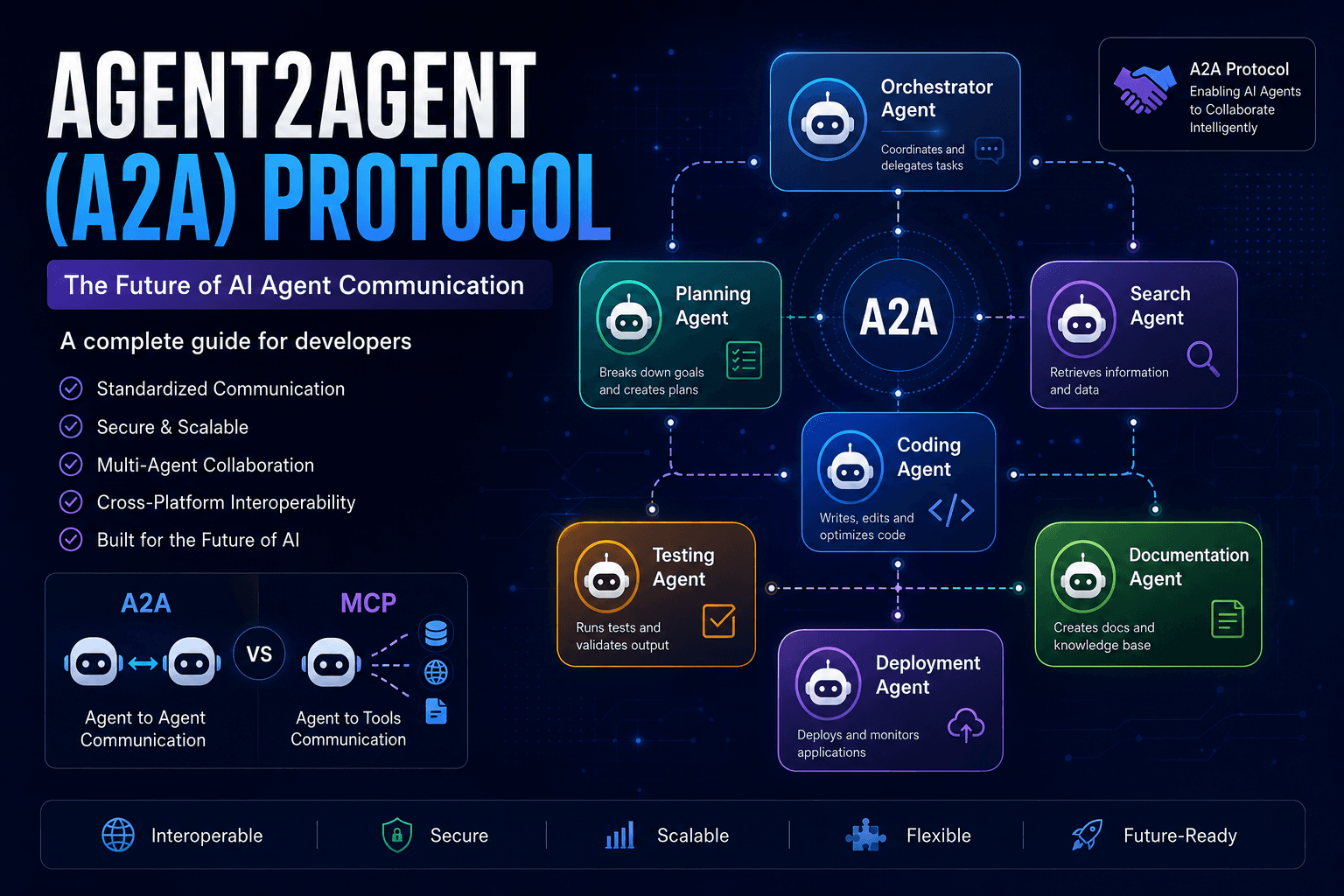
Agent2Agent (A2A) Protocol Explained: The Complete Developer Guide for 2026
Discover how the Agent2Agent (A2A) Protocol enables AI agents to collaborate securely and efficiently. Learn its architecture, use cases, benefits, and how it compares with MCP.
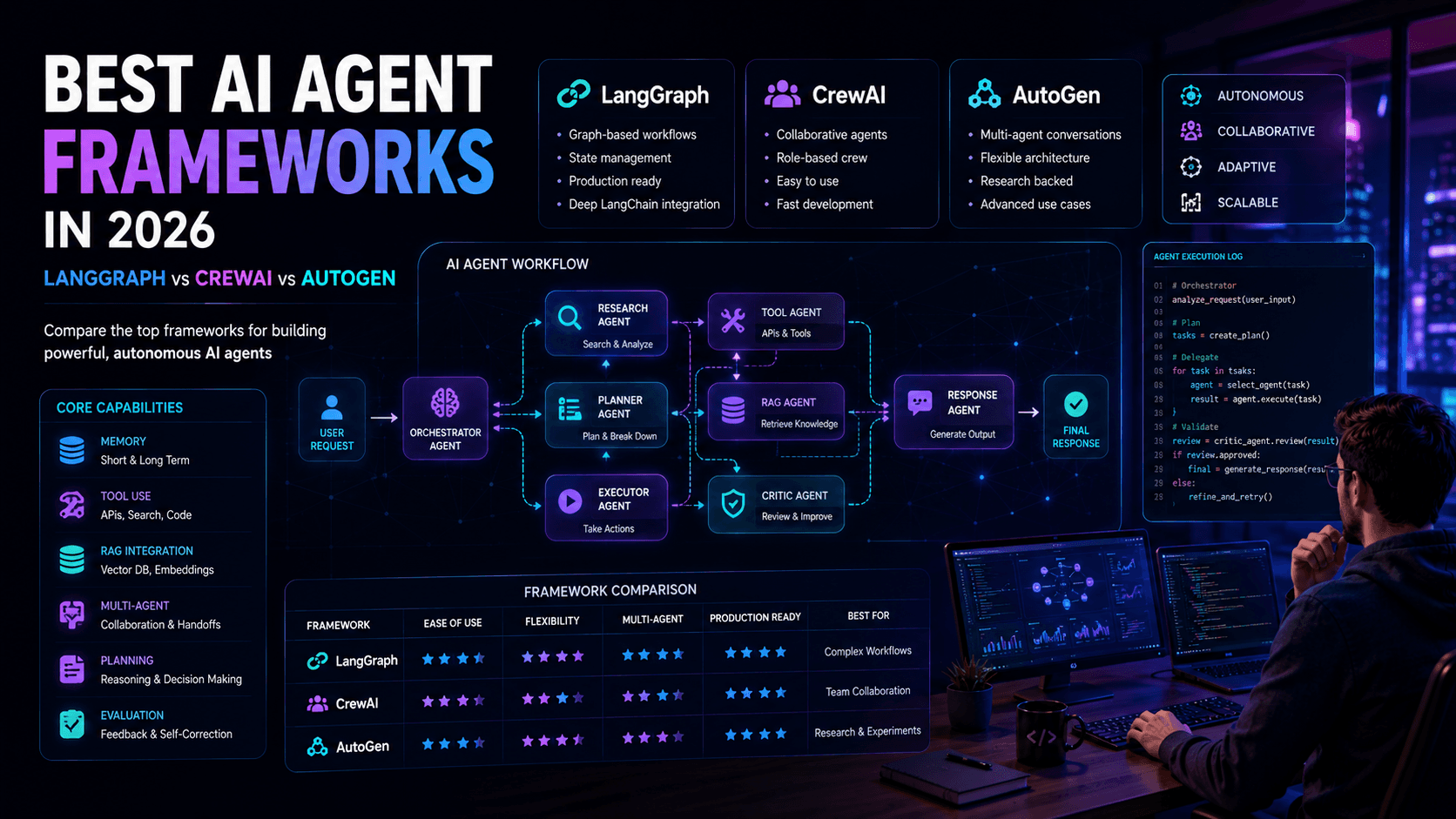
Best AI Agent Frameworks in 2026: LangGraph vs CrewAI vs AutoGen
Looking to build AI agents? This guide compares LangGraph, CrewAI, AutoGen, and other leading AI agent frameworks to help developers choose the right solution.
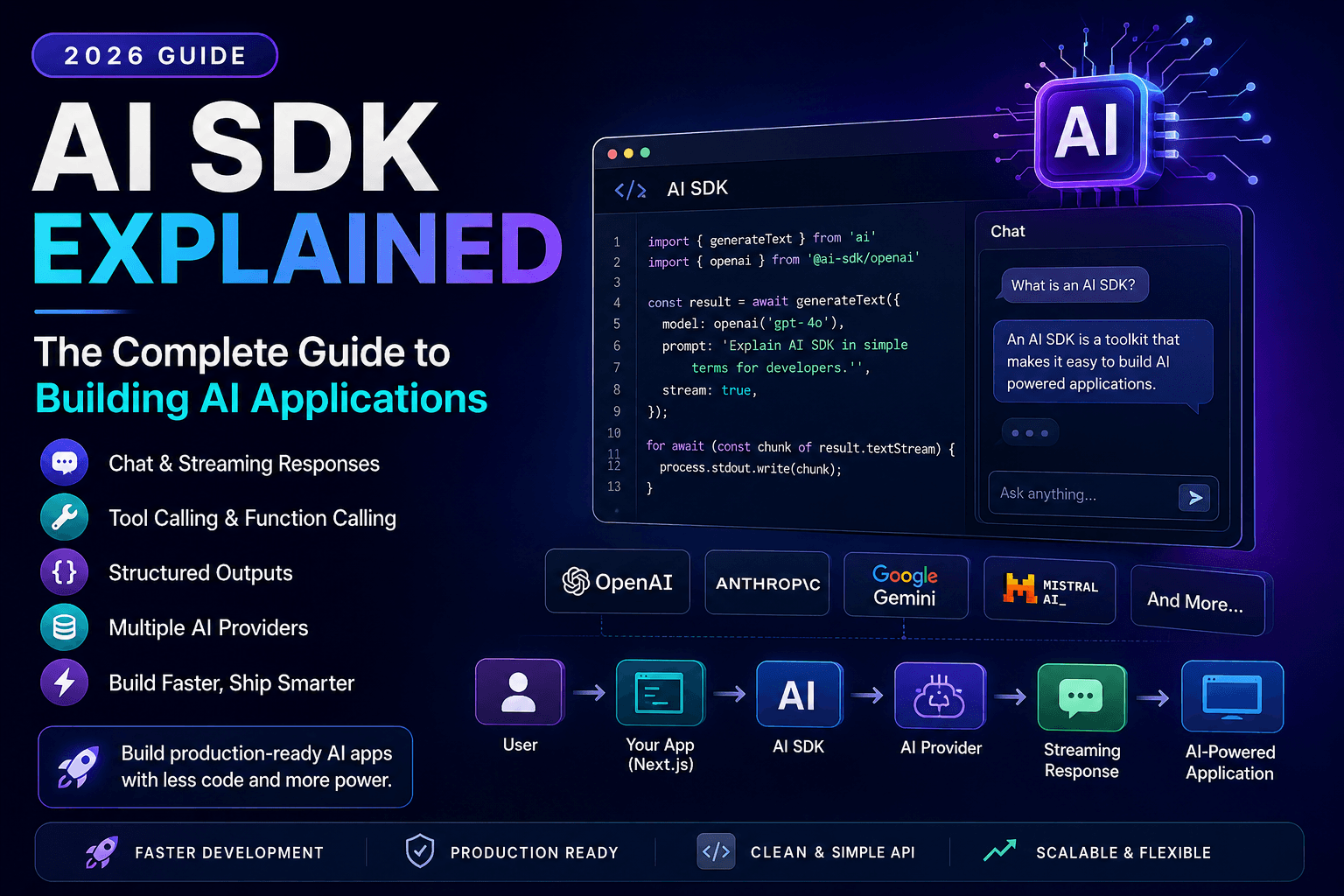
AI SDK Explained: The Complete Guide to Building AI Applications in 2026
Discover how AI SDKs simplify building AI-powered applications. Learn streaming responses, tool calling, chat interfaces, structured outputs, and production best practices.