How AI Agents Work: A Beginner-Friendly Guide for Developers
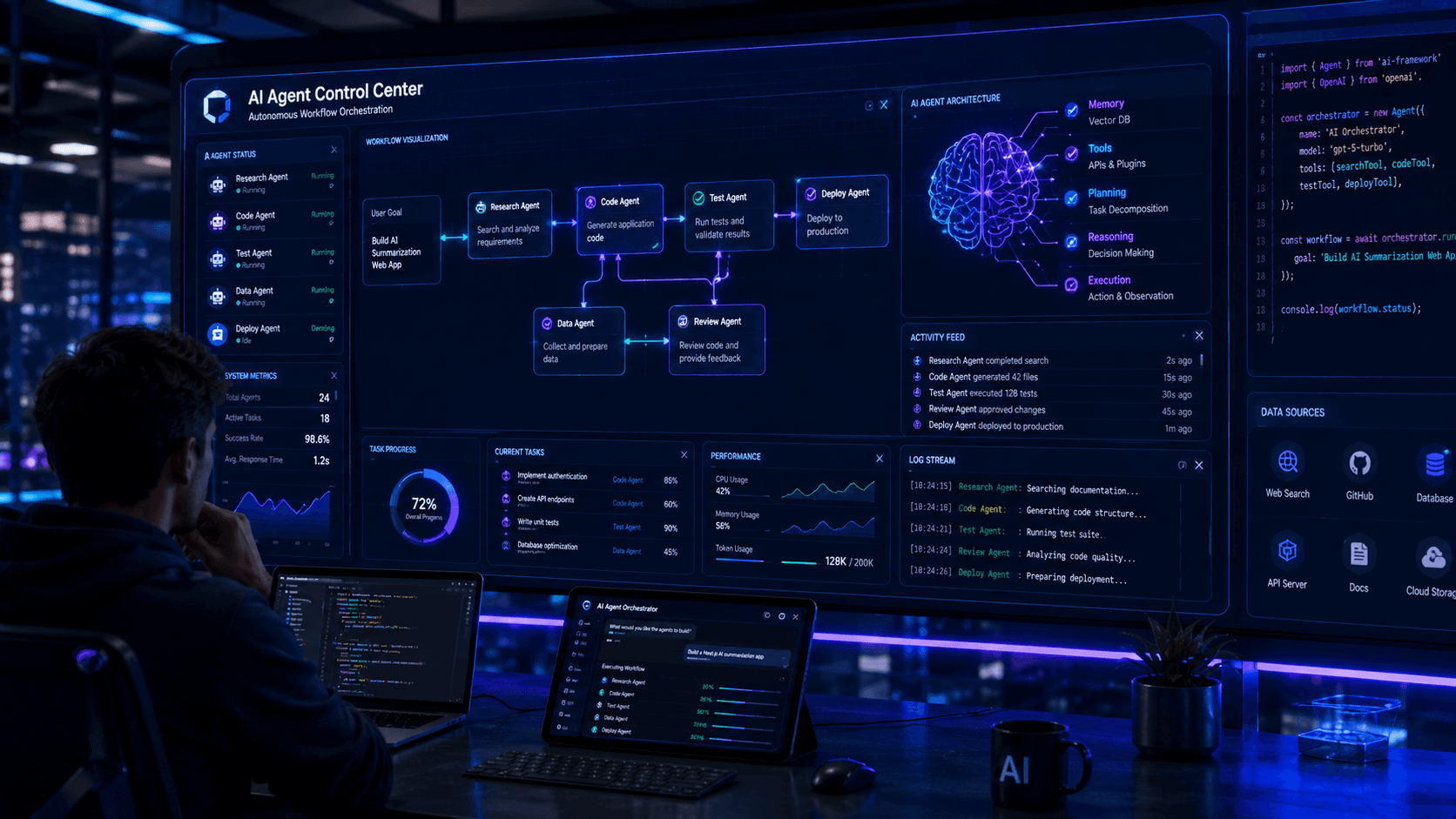
AI agents are transforming software development and business automation. Learn how they work, their architecture, real-world use cases, and how developers can build them.
Artificial Intelligence is evolving far beyond simple chatbots and question-answering systems.
The latest shift in AI is the rise of AI agents—software systems capable of reasoning, planning, using tools, and taking actions to achieve goals with minimal human intervention.
If you've recently explored AI development, you've likely encountered terms such as:
- Agentic AI
- Autonomous agents
- AI workflows
- Multi-agent systems
- AI automation
These concepts are rapidly becoming some of the most important topics in modern software development.
Companies are using AI agents to automate customer support, perform research, manage workflows, generate reports, write code, and even coordinate entire business processes.
For developers, understanding how AI agents work is quickly becoming a valuable skill.
In this guide, you'll learn what AI agents are, how they differ from traditional chatbots, the architecture behind modern agent systems, and how developers can start building them.
What Is an AI Agent?
An AI agent is a software system that can:
- Understand goals
- Reason about tasks
- Create plans
- Use tools
- Execute actions
- Evaluate results
Unlike traditional software that follows fixed instructions, AI agents can adapt their behavior based on context and objectives.
Think of the difference like this:
Traditional Software
Input
 ↓
Fixed Logic
 ↓
Output
AI Agent
Goal
 ↓
Reasoning
 ↓
Planning
 ↓
Tool Usage
 ↓
Execution
 ↓
Evaluation
 ↓
Result
This additional layer of reasoning is what makes AI agents significantly more powerful than conventional automation systems.
Why AI Agents Matter
Most AI applications today still operate in a reactive way.
For example:
User:
Write an email.

AI:
Returns email.
The AI responds and stops.
An AI agent behaves differently.
Example:
Goal:
Create a weekly marketing report.
The agent might:
- Collect analytics data
- Analyze performance
- Generate charts
- Write summaries
- Create a PDF
- Email stakeholders
without requiring step-by-step instructions.
This ability to perform multi-step tasks is why AI agents are receiving so much attention.
AI Agents vs Chatbots
One of the most common misconceptions is that AI agents and chatbots are the same thing.
They are not.
| Feature | Chatbot | AI Agent |
|---|---|---|
| Answers Questions | ✅ | ✅ |
| Uses External Tools | Limited | ✅ |
| Multi-Step Planning | ❌ | ✅ |
| Performs Actions | ❌ | ✅ |
| Autonomous Decisions | ❌ | ✅ |
| Workflow Automation | ❌ | ✅ |
Chatbots are conversational.
Agents are operational.
A chatbot talks.
An agent works.
The Core Components of an AI Agent
Modern AI agents are built from several key components.
1. Large Language Model (LLM)
The language model acts as the agent's brain.
Examples include:
- GPT models
- Claude models
- Gemini models
- Open-source models
The LLM handles:
- Understanding instructions
- Reasoning
- Planning
- Decision-making
Without the language model, the agent cannot think through problems.
2. Memory
Memory allows agents to remember information.
Types include:
Short-Term Memory
Maintains context during a conversation.
Long-Term Memory
Stores information across sessions.
Vector Memory
Uses embeddings to retrieve relevant information from large knowledge bases.
Memory allows agents to improve over time and maintain context.
3. Tools
Tools allow agents to interact with external systems.
Examples:
- Search engines
- APIs
- Databases
- Email systems
- File systems
- Calendars
Without tools, agents can only generate text.
Tools enable action.
4. Planning Layer
Planning determines:
- What needs to happen
- Which tools should be used
- The order of execution
This is what gives agents their autonomous behavior.
How AI Agents Make Decisions
Most modern agents follow a reasoning cycle.
Step 1:
Understand the goal.
Step 2:
Break the goal into smaller tasks.
Step 3:
Choose tools.
Step 4:
Execute actions.
Step 5:
Evaluate outcomes.
Step 6:
Repeat if necessary.
Example:
Goal:
Research remote React jobs.
The agent might:
- Search job boards
- Filter React positions
- Compare salaries
- Generate a summary
- Deliver results
without additional instructions.
Real-World Use Cases
Software Development
AI coding agents can:
- Generate code
- Review pull requests
- Run tests
- Refactor applications
- Debug issues
Customer Support
Agents can:
- Answer questions
- Create tickets
- Escalate problems
- Update CRM systems
Research
Agents can:
- Search multiple sources
- Analyze information
- Generate reports
- Summarize findings
Business Automation
Common tasks include:
- Scheduling
- Reporting
- Data entry
- Workflow management
Popular Frameworks for Building AI Agents
Developers don't need to build everything from scratch.
Popular frameworks include:
- LangChain
- LangGraph
- CrewAI
- AutoGen
- OpenAI Agents SDK
These tools simplify:
- Tool integration
- Memory management
- Agent orchestration
- Multi-agent communication
Common Challenges
AI agents are powerful, but they are not perfect.
Hallucinations
Agents may generate incorrect information.
Cost
Complex workflows often require multiple model calls.
Reliability
Agents sometimes select poor actions.
Security
Giving agents excessive permissions can create risks.
Developers should implement safeguards and monitoring systems.
Common Mistakes Developers Make
Giving Agents Unlimited Access
Always limit permissions.
Skipping Human Oversight
Critical decisions should remain reviewable.
Ignoring Logging
Monitoring agent behavior is essential.
Defining Vague Goals
Clear goals produce better results.
Frequently Asked Questions
Are AI agents replacing developers?
No.
They automate repetitive tasks but still require human guidance.
What is Agentic AI?
Agentic AI refers to systems capable of autonomous decision-making and action execution.
Are AI agents better than chatbots?
For complex workflows, yes.
For simple conversations, traditional chatbots may be sufficient.
Should developers learn AI agents?
Absolutely.
Agent-based systems are becoming an important part of modern software development.
Final Verdict
AI agents represent one of the most significant advancements in artificial intelligence.
By combining reasoning, memory, planning, and tool usage, they can automate tasks that were previously impossible with traditional software.
For developers, understanding AI agents is no longer optional if you plan to work with modern AI systems.
Whether you're building AI-powered SaaS products, automating business processes, or exploring the future of software development, learning how AI agents work is one of the best investments you can make in 2026 and beyond.
Related Articles
More from the AI Tools category
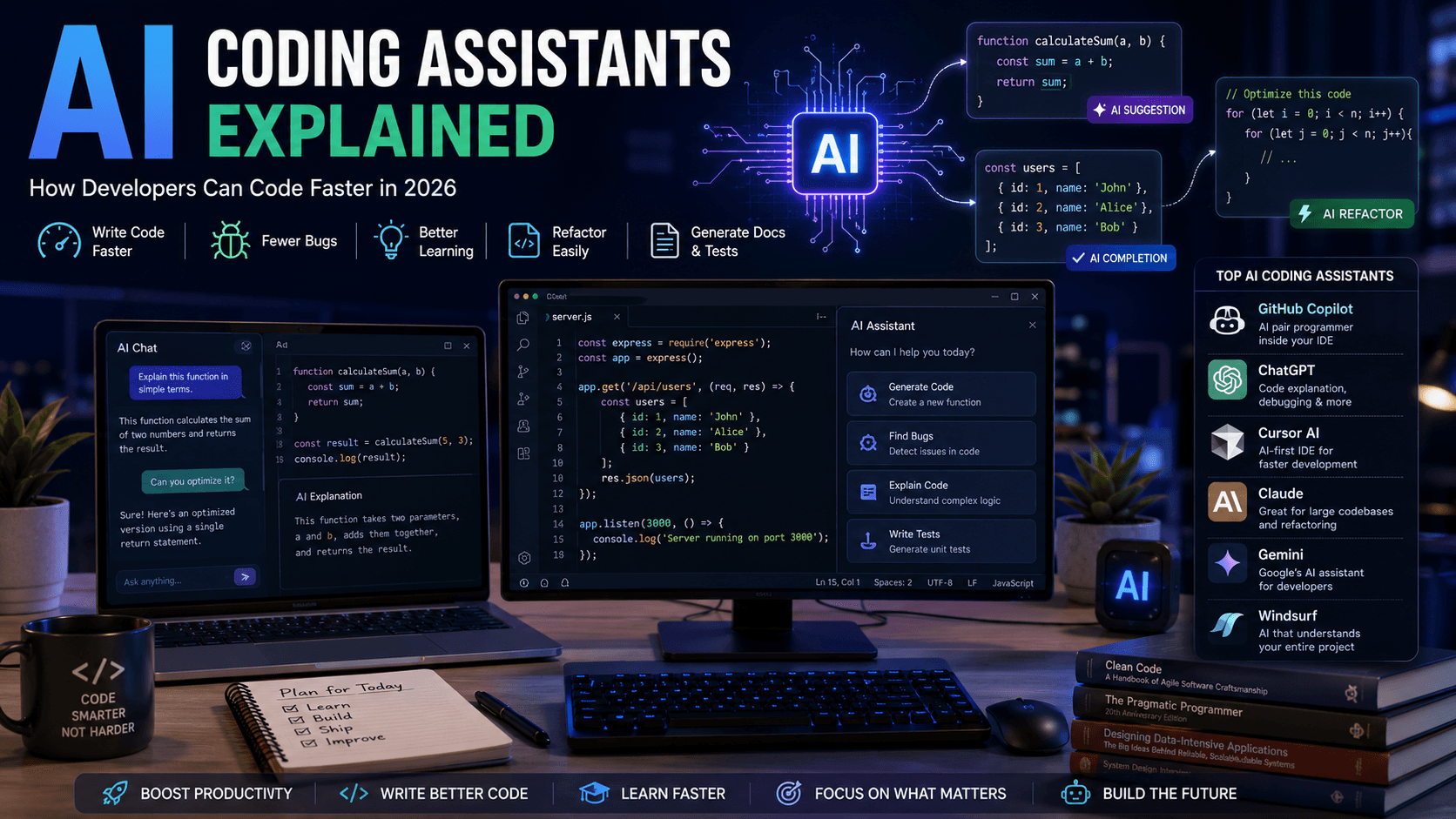
AI Coding Assistants Explained: How Developers Can Code Faster in 2026
AI coding assistants are transforming software development. Learn how they work, which tools to choose, and how they can improve your productivity in 2026.
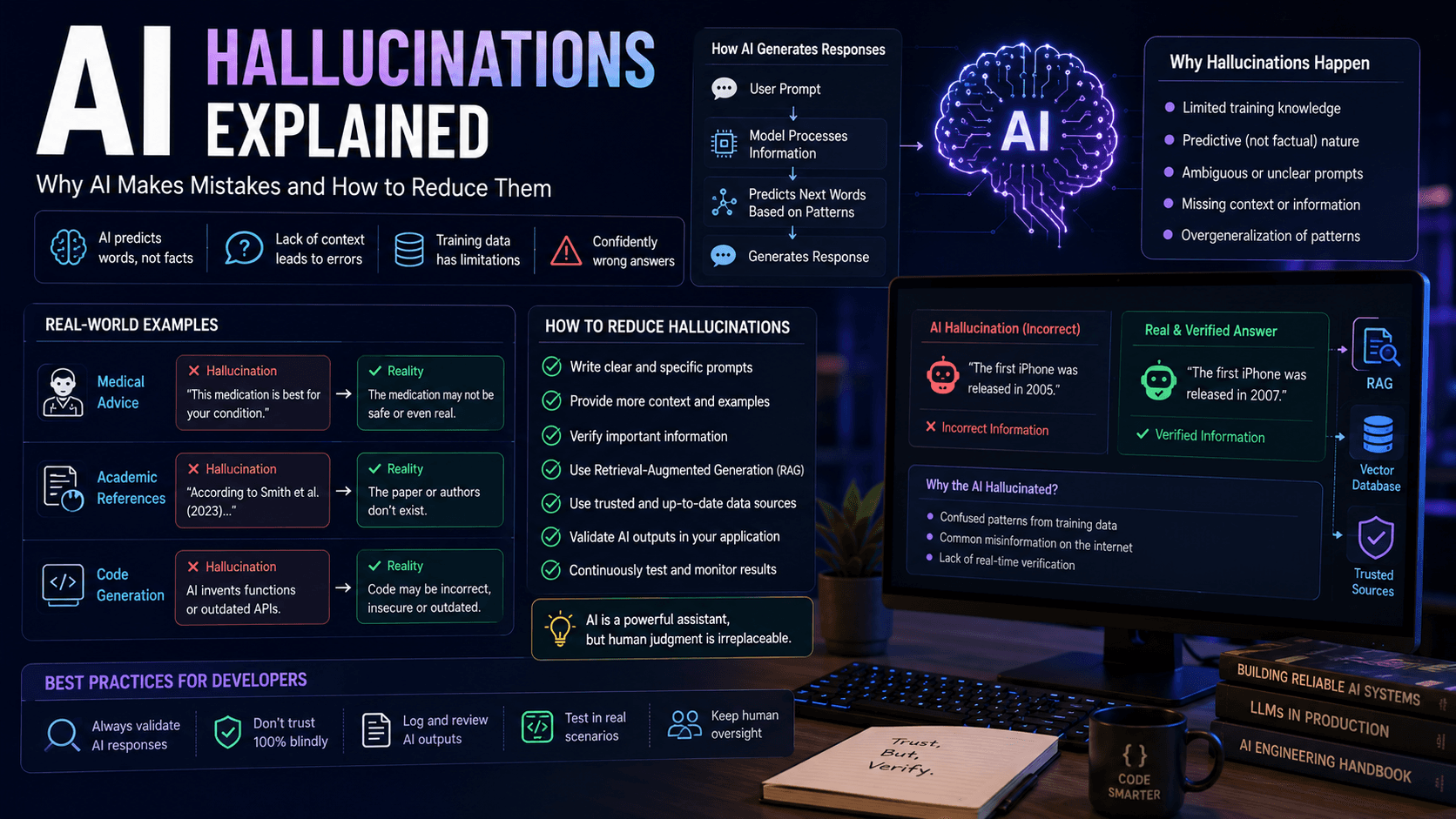
AI Hallucinations Explained: Why AI Makes Mistakes and How to Reduce Them
AI hallucinations are one of the biggest challenges in modern artificial intelligence. Discover why they happen, how they affect developers and businesses, and how to build more reliable AI systems.
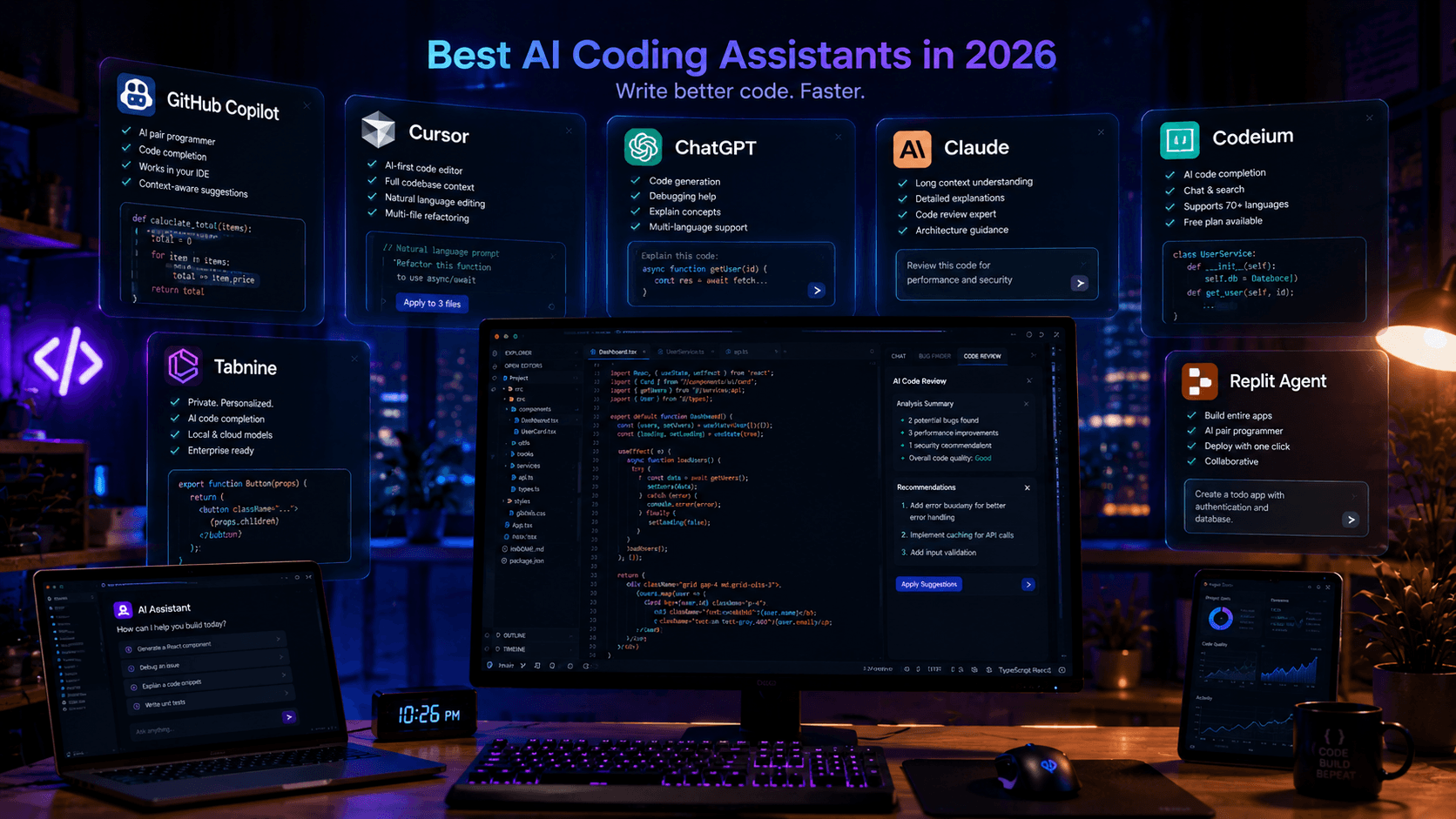
Best AI Coding Assistants in 2026: Complete Developer Guide
Looking for the best AI coding assistant? This guide compares the top AI tools for developers, including ChatGPT, Claude, Cursor, GitHub Copilot, and more.