Best AI Agent Frameworks in 2026: LangGraph vs CrewAI vs AutoGen
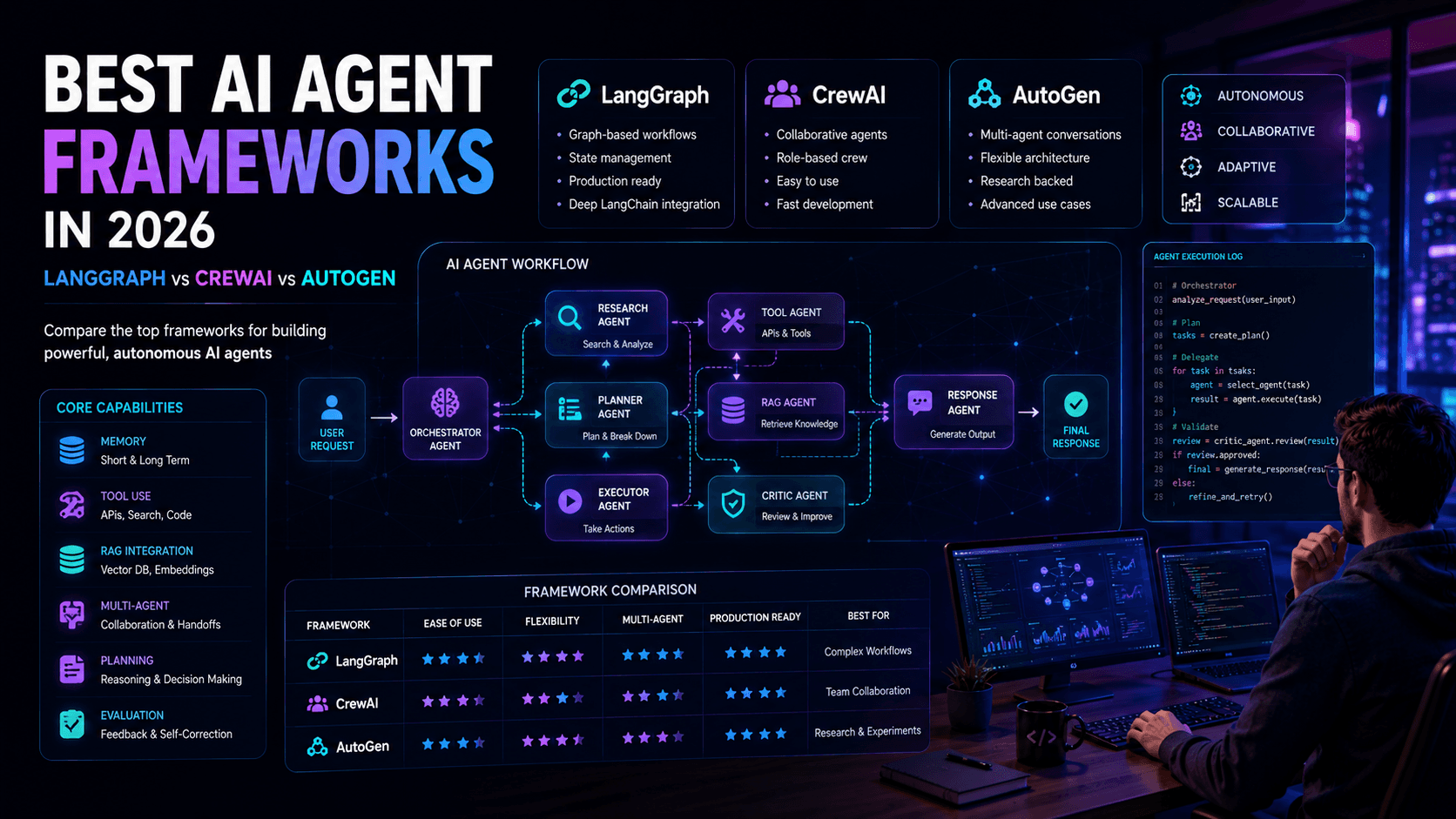
Looking to build AI agents? This guide compares LangGraph, CrewAI, AutoGen, and other leading AI agent frameworks to help developers choose the right solution.
Artificial Intelligence is rapidly evolving from simple chatbots into autonomous systems capable of reasoning, planning, and executing complex workflows.
These systems are commonly known as AI agents.
Instead of responding to a single prompt, AI agents can:
- Make decisions
- Use tools
- Access APIs
- Retrieve knowledge
- Execute multi-step tasks
As demand for AI agents grows, several frameworks have emerged to simplify development.
In this guide, we'll compare the most popular AI agent frameworks available in 2026 and help you choose the right one for your next project.
What Is an AI Agent Framework?
An AI agent framework provides the infrastructure needed to build autonomous AI systems.
Rather than manually managing prompts, memory, tools, and workflows, developers can use a framework that handles much of the complexity.
If you're new to the concept of AI agents, start with our guide on How AI Agents Work.
Why AI Agent Frameworks Matter
Building agents from scratch requires managing:
- LLM interactions
- Memory
- Tool calling
- State management
- Multi-step reasoning
- Workflow orchestration
Agent frameworks provide reusable components that speed up development.
1. LangGraph
LangGraph is currently one of the most powerful frameworks for building production AI agents.
Created by the LangChain team, it introduces graph-based workflows that allow developers to define complex agent behaviors.
Strengths
- Production-ready architecture
- State management
- Multi-agent support
- Strong LangChain integration
Best For
- Enterprise applications
- Complex workflows
- Long-running agents
Pros
- Flexible architecture
- Scalable design
- Strong ecosystem
Cons
- Learning curve for beginners
2. CrewAI
CrewAI focuses on collaborative AI agents.
Developers can create multiple agents that work together as a team.
Example:
Research Agent
 ↓
Writer Agent
 ↓
Editor Agent
 ↓
Final Report
Strengths
- Easy to understand
- Multi-agent collaboration
- Fast development
Best For
- Content generation
- Research workflows
- Business automation
Pros
- Beginner friendly
- Clean API
Cons
- Less flexible than LangGraph
3. AutoGen
AutoGen is Microsoft's framework for agent conversations.
Agents communicate with each other to solve problems collaboratively.
Strengths
- Multi-agent conversations
- Strong research backing
- Flexible architecture
Best For
- Experimental systems
- Research projects
- Advanced agent workflows
Pros
- Powerful communication patterns
Cons
- More complex setup
4. OpenAI Agents
OpenAI continues to expand agent capabilities through tool calling and workflow management.
Strengths
- Native OpenAI integration
- Fast setup
- Reliable tooling
Best For
- OpenAI-focused applications
Pros
- Simplicity
- Strong model support
Cons
- More limited than dedicated frameworks
Framework Comparison
| Framework | Ease of Use | Flexibility | Production Ready | Multi-Agent |
|---|---|---|---|---|
| LangGraph | ⭐⭐⭐ | ⭐⭐⭐⭐⭐ | ⭐⭐⭐⭐⭐ | ⭐⭐⭐⭐⭐ |
| CrewAI | ⭐⭐⭐⭐⭐ | ⭐⭐⭐⭐ | ⭐⭐⭐⭐ | ⭐⭐⭐⭐⭐ |
| AutoGen | ⭐⭐⭐ | ⭐⭐⭐⭐⭐ | ⭐⭐⭐⭐ | ⭐⭐⭐⭐⭐ |
| OpenAI Agents | ⭐⭐⭐⭐⭐ | ⭐⭐⭐ | ⭐⭐⭐⭐ | ⭐⭐⭐ |
How Agent Frameworks Use RAG
Most modern AI agents rely on Retrieval-Augmented Generation.
This allows agents to access:
- Company documentation
- Knowledge bases
- Private business data
Learn more in RAG Explained for Developers.
How Agent Frameworks Use Vector Databases
Many agents need long-term knowledge storage.
This is commonly achieved using vector databases.
Popular choices include:
- Pinecone
- Weaviate
- Qdrant
- Chroma
Read our guide on Vector Databases Explained.
LangChain vs LangGraph
Many developers confuse these technologies.
LangChain
Provides:
- Prompts
- Chains
- Retrieval
- Memory
LangGraph
Provides:
- Agent workflows
- State management
- Complex decision trees
Learn more in LangChain Tutorial for Developers.
Which Framework Should You Choose?
Beginners
Choose:
- CrewAI
Enterprise Applications
Choose:
- LangGraph
Research Projects
Choose:
- AutoGen
OpenAI-Centric Apps
Choose:
- OpenAI Agents
Frequently Asked Questions
What is the best AI agent framework?
Currently, LangGraph is considered one of the strongest options for production systems.
Is CrewAI easier than LangGraph?
Yes.
CrewAI is generally easier to learn.
Do AI agents need vector databases?
Many production systems use vector databases for memory and retrieval.
Can AI agents use OpenAI APIs?
Absolutely.
Most frameworks support OpenAI models.
Further Reading
- How AI Agents Work
- LangChain Tutorial for Developers
- RAG Explained for Developers
- Vector Databases Explained
- OpenAI API Complete Guide
Final Verdict
AI agent frameworks are becoming a foundational part of modern AI development.
For most production applications, LangGraph currently offers the best balance of flexibility, scalability, and long-term maintainability.
However, CrewAI and AutoGen remain excellent options depending on your specific use case.
As AI systems become more autonomous, understanding these frameworks will become an increasingly valuable skill for developers.
Related Articles
More from the AI + Code category
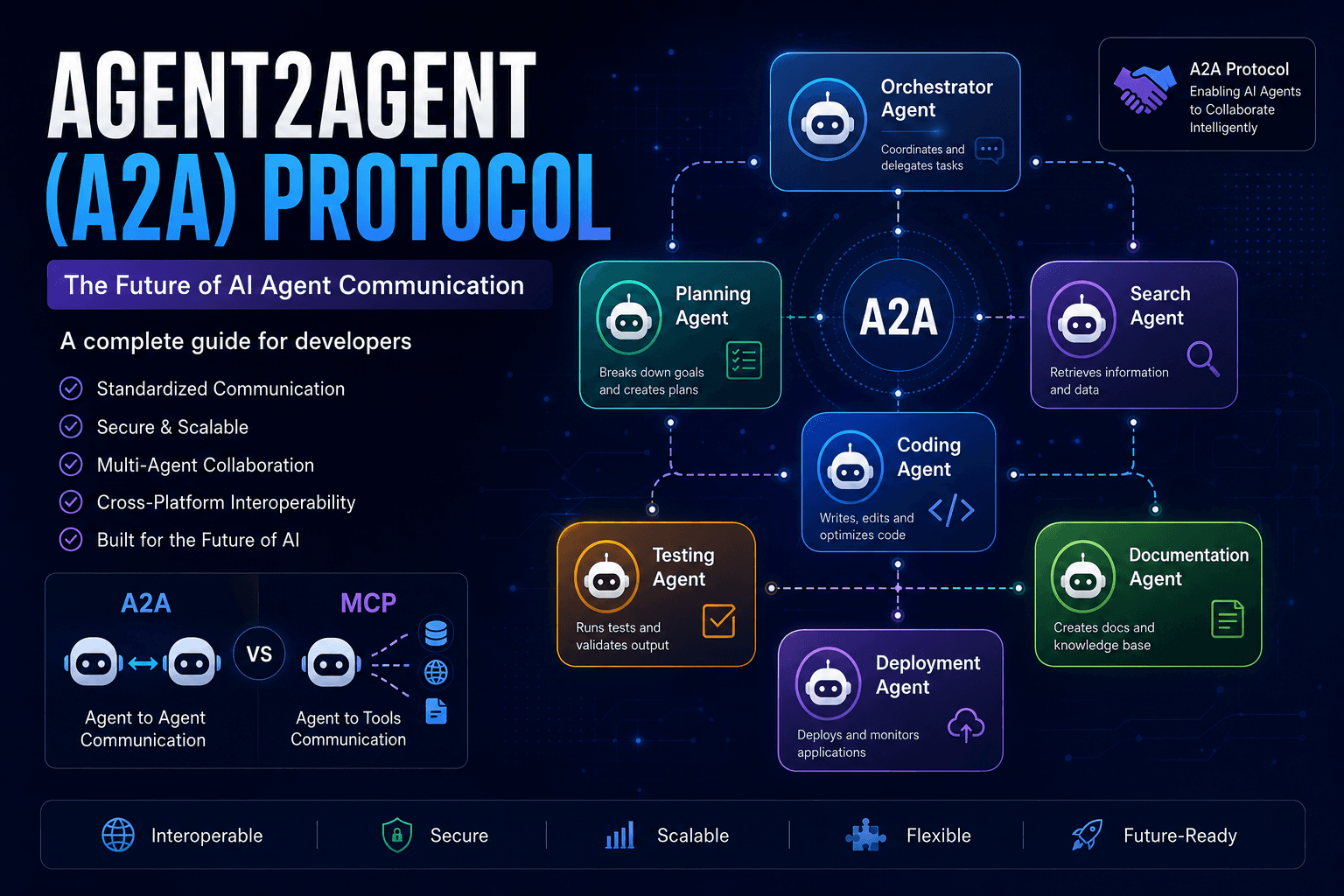
Agent2Agent (A2A) Protocol Explained: The Complete Developer Guide for 2026
Discover how the Agent2Agent (A2A) Protocol enables AI agents to collaborate securely and efficiently. Learn its architecture, use cases, benefits, and how it compares with MCP.
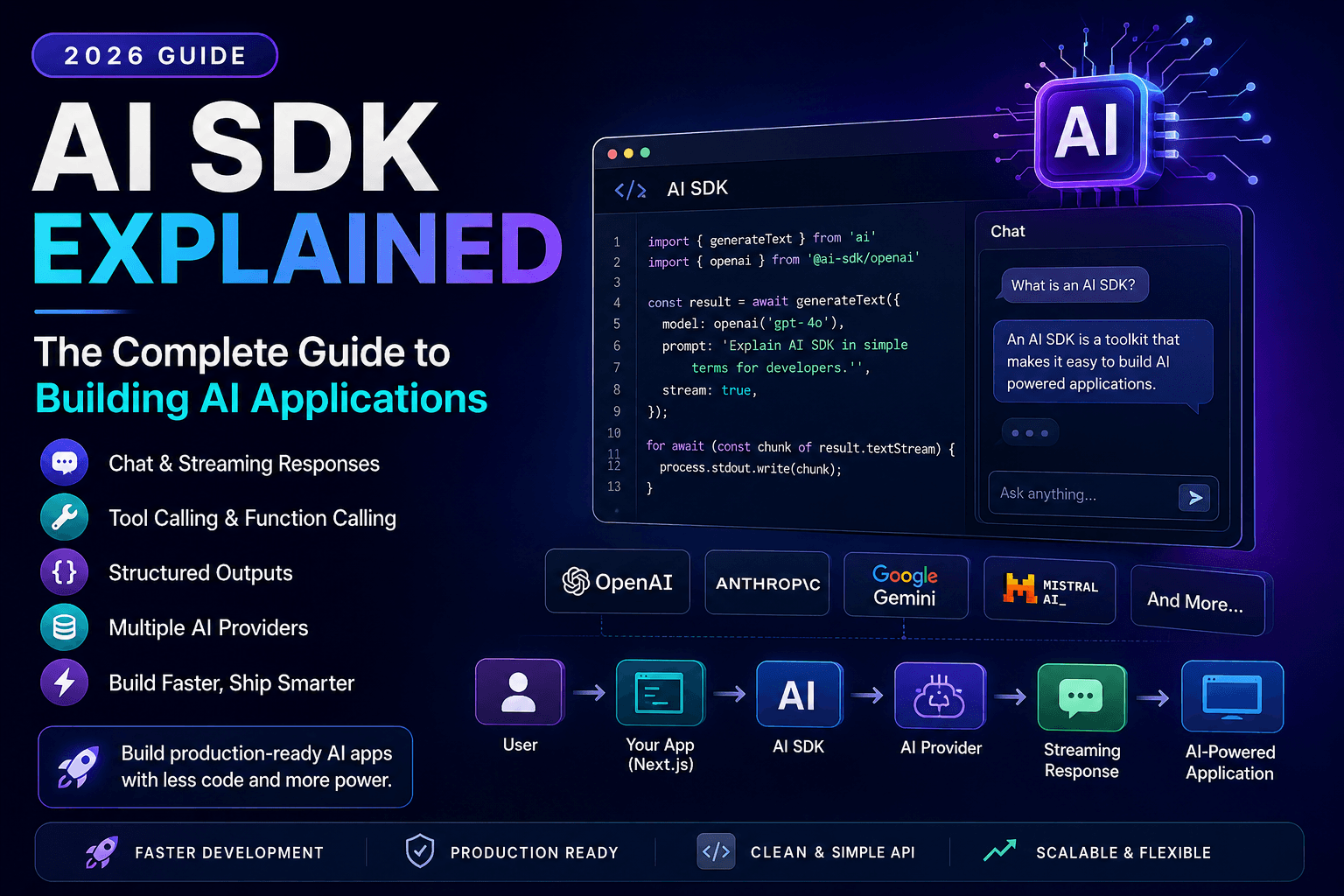
AI SDK Explained: The Complete Guide to Building AI Applications in 2026
Discover how AI SDKs simplify building AI-powered applications. Learn streaming responses, tool calling, chat interfaces, structured outputs, and production best practices.
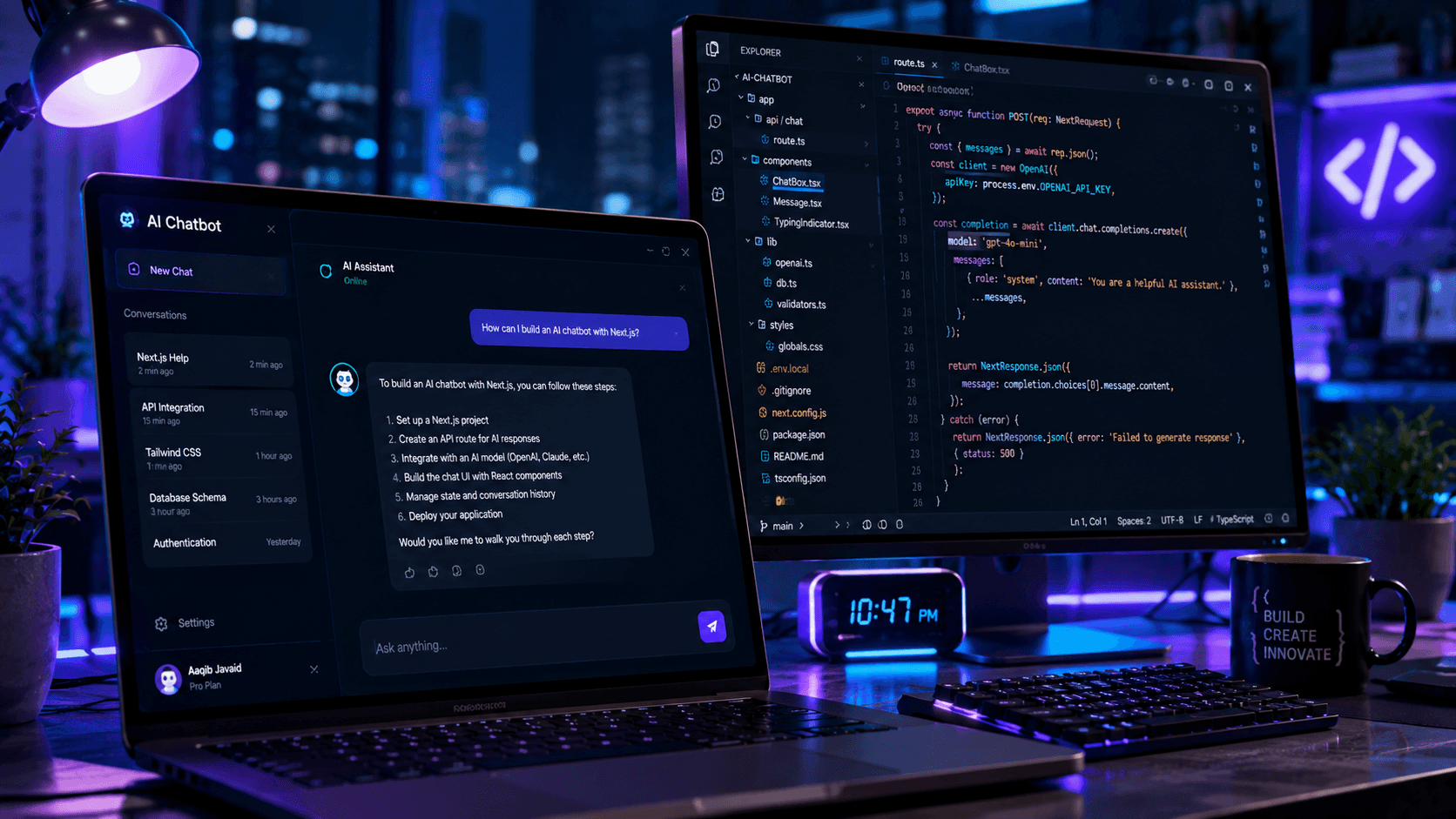
Build an AI Chatbot with Next.js: Complete Developer Guide
Want to build your own AI chatbot? This guide walks through creating an AI-powered chatbot with Next.js, React, and modern AI APIs.