RAG Explained for Developers: Build AI Applications That Know Your Data
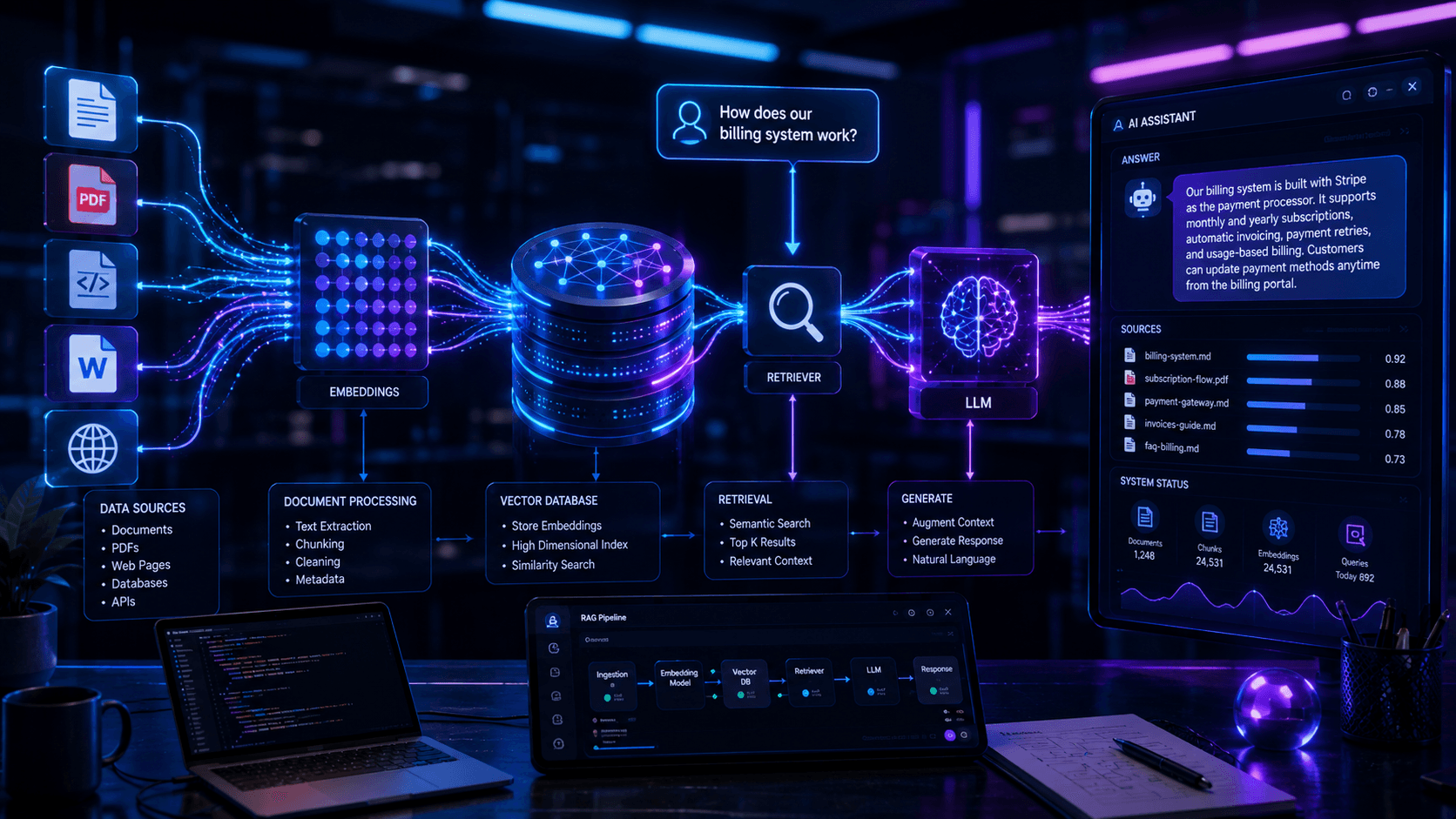
RAG is one of the most important concepts in modern AI development. Learn how Retrieval-Augmented Generation helps AI applications access custom knowledge and produce more accurate responses.
Artificial Intelligence models are incredibly powerful, but they have one major limitation.
They only know what was included in their training data.
If you ask a language model about:
- Your company documents
- Internal knowledge bases
- Private PDFs
- Customer records
- Business policies
the model has no direct access to that information.
This challenge led to the creation of one of the most important AI architectures in modern software development:
Retrieval-Augmented Generation (RAG).
Today, RAG powers:
- AI chatbots
- Enterprise assistants
- Customer support systems
- Internal company search tools
- Documentation assistants
and many of the most successful AI products currently on the market.
Many modern AI applications combine RAG with conversational interfaces to deliver accurate, context-aware responses. If you're building your first AI application, check out our guide on Building an AI Chatbot with Next.js, where you'll learn how chat interfaces connect to modern AI models.
In this guide, you'll learn exactly how RAG works, why developers use it, and how to build your own RAG-powered applications.
What Is RAG?
RAG stands for:
Retrieval-Augmented Generation
It combines two systems:
- Information Retrieval
- AI Text Generation
Instead of asking an AI model to answer from memory alone, a RAG system first retrieves relevant information and then provides that information to the model before generating a response.
This dramatically improves accuracy.
Why RAG Matters
Traditional AI workflow:
Question
 ↓
LLM
 ↓
Answer
RAG workflow:
Question
 ↓
Retriever
 ↓
Relevant Documents
 ↓
LLM
 ↓
Answer
The AI receives fresh information before responding.
This helps solve:
- Hallucinations
- Outdated information
- Missing business knowledge
- Private data access
Before implementing a RAG system, it's important to understand how AI models are accessed and integrated into applications. Our OpenAI API Complete Guide explains the APIs that power many modern AI products.
Example Problem
Imagine a customer asks:
What is our refund policy?
A standard AI model may not know.
A RAG system can:
- Search company documents
- Find the refund policy
- Inject the content into the prompt
- Generate an accurate answer
The response becomes grounded in real data.
Core Components of a RAG System
Most RAG applications contain four major components.
1. Documents
Your knowledge source.
Examples:
- PDFs
- Documentation
- Notion pages
- Databases
- Websites
2. Embeddings
Documents are converted into numerical vectors.
Embeddings allow semantic search.
Instead of matching keywords, the system understands meaning.
3. Vector Database
Embeddings are stored inside a vector database.
Popular options include:
- Pinecone
- Chroma
- Weaviate
- Qdrant
These databases are optimized for similarity search.
4. Language Model
After relevant documents are retrieved, the LLM generates the final response.
Examples:
- GPT models
- Claude models
- Gemini models
Many advanced AI systems combine language models, memory, and retrieval to create autonomous workflows. These concepts are explored further in our guide on How AI Agents Work.
How Retrieval Works
Suppose a user asks:
How do I deploy our Next.js application?
The system:
- Converts the question into an embedding
- Searches the vector database
- Finds deployment documentation
- Sends the results to the LLM
- Generates an answer
This process happens in seconds.
Why RAG Is Better Than Fine-Tuning
Many developers assume fine-tuning is always the answer.
Often, RAG is the better solution.
| Feature | RAG | Fine-Tuning |
|---|---|---|
| Updates Instantly | ✅ | ❌ |
| Lower Cost | ✅ | ❌ |
| Easier Maintenance | ✅ | ❌ |
| Uses Private Data | ✅ | Limited |
| Requires Retraining | ❌ | ✅ |
For most business applications, RAG is the preferred approach.
Building a RAG Application
Modern RAG applications often follow this architecture:
Documents
 ↓
Embeddings
 ↓
Vector Database
 ↓
Retriever
 ↓
LLM
 ↓
Answer
A typical stack might include:
- Next.js
- OpenAI
- LangChain
- Pinecone
This combination is popular among AI startups.
RAG is frequently used inside AI chat applications because it allows assistants to answer questions using custom business data. If you're building a production-ready chatbot, read Build an AI Chatbot with Next.js.
Real-World RAG Use Cases
Customer Support
Answer questions using company documentation.
SaaS Products
Provide AI assistants trained on user data.
Internal Knowledge Bases
Allow employees to search company information.
Legal Research
Search large document collections quickly.
Healthcare
Retrieve medical guidelines and records.
As AI systems become more capable, many organizations combine RAG with agent-based architectures that can reason, plan, and execute tasks automatically. Learn more in How AI Agents Work.
Common Mistakes
Storing Entire Documents
Large documents should be chunked before embedding.
Ignoring Metadata
Metadata improves retrieval quality.
Poor Chunk Sizes
Chunks that are too large reduce relevance.
No Evaluation
Always test retrieval accuracy.
Best Practices
- Use high-quality embeddings
- Store useful metadata
- Monitor retrieval quality
- Cache common queries
- Evaluate responses regularly
These practices significantly improve performance.
Frequently Asked Questions
Is RAG better than fine-tuning?
For most business knowledge applications, yes.
Do I need a vector database?
For production systems, usually yes.
Can I use RAG with Next.js?
Absolutely.
Many modern AI applications use Next.js for their frontend and API layers.
Is RAG difficult to learn?
The concepts are straightforward, but building high-quality systems requires practice.
Further Reading
Continue learning AI development with these guides:
- Build an AI Chatbot with Next.js
- OpenAI API Complete Guide
- How AI Agents Work
- Claude vs ChatGPT for Programming
These articles will help you understand the broader ecosystem of AI application development, from APIs and chatbots to autonomous AI agents and modern developer workflows.
Final Verdict
Retrieval-Augmented Generation is one of the most important technologies in modern AI development.
Instead of relying solely on a model's training data, RAG allows applications to access fresh, private, and domain-specific information.
For developers building AI products in 2026, understanding RAG is no longer optional. It is quickly becoming a foundational skill alongside APIs, databases, and frontend development.
Whether you're creating AI chatbots, SaaS products, enterprise assistants, or internal knowledge systems, mastering RAG will help you build more accurate and useful AI applications.
Related Articles
More from the AI + Code category
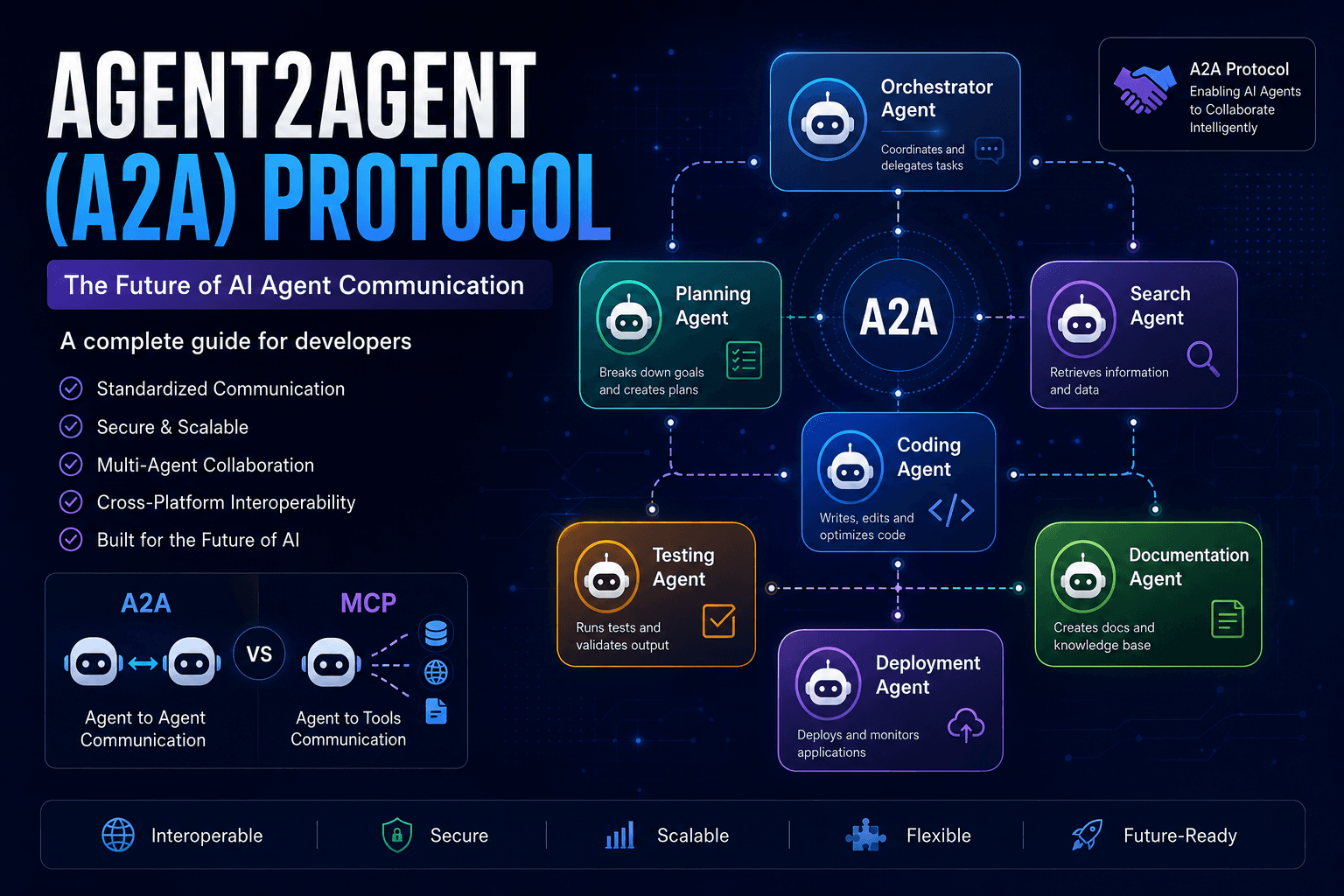
Agent2Agent (A2A) Protocol Explained: The Complete Developer Guide for 2026
Discover how the Agent2Agent (A2A) Protocol enables AI agents to collaborate securely and efficiently. Learn its architecture, use cases, benefits, and how it compares with MCP.
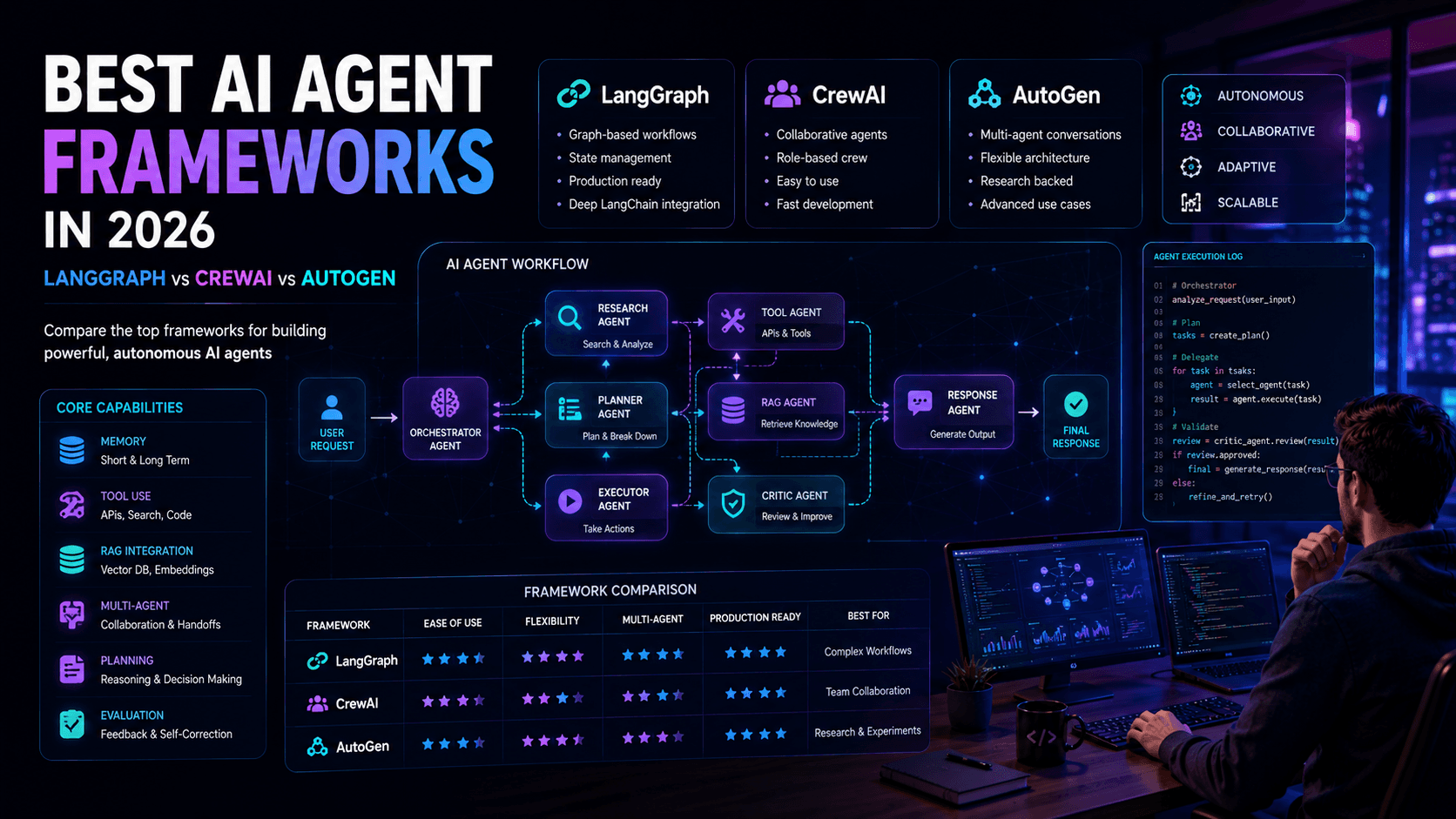
Best AI Agent Frameworks in 2026: LangGraph vs CrewAI vs AutoGen
Looking to build AI agents? This guide compares LangGraph, CrewAI, AutoGen, and other leading AI agent frameworks to help developers choose the right solution.
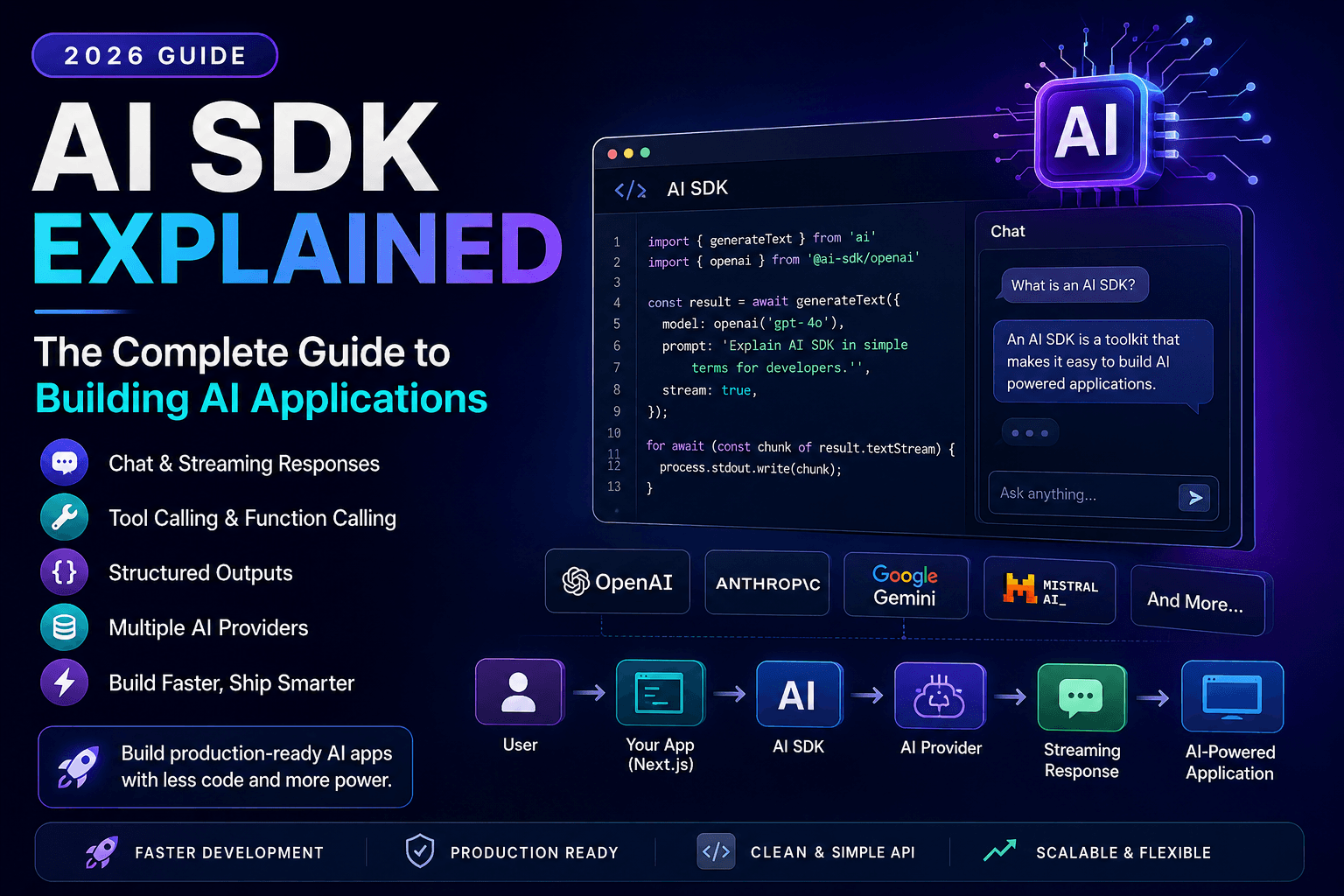
AI SDK Explained: The Complete Guide to Building AI Applications in 2026
Discover how AI SDKs simplify building AI-powered applications. Learn streaming responses, tool calling, chat interfaces, structured outputs, and production best practices.