AI Hallucinations Explained: Why AI Makes Mistakes and How to Reduce Them
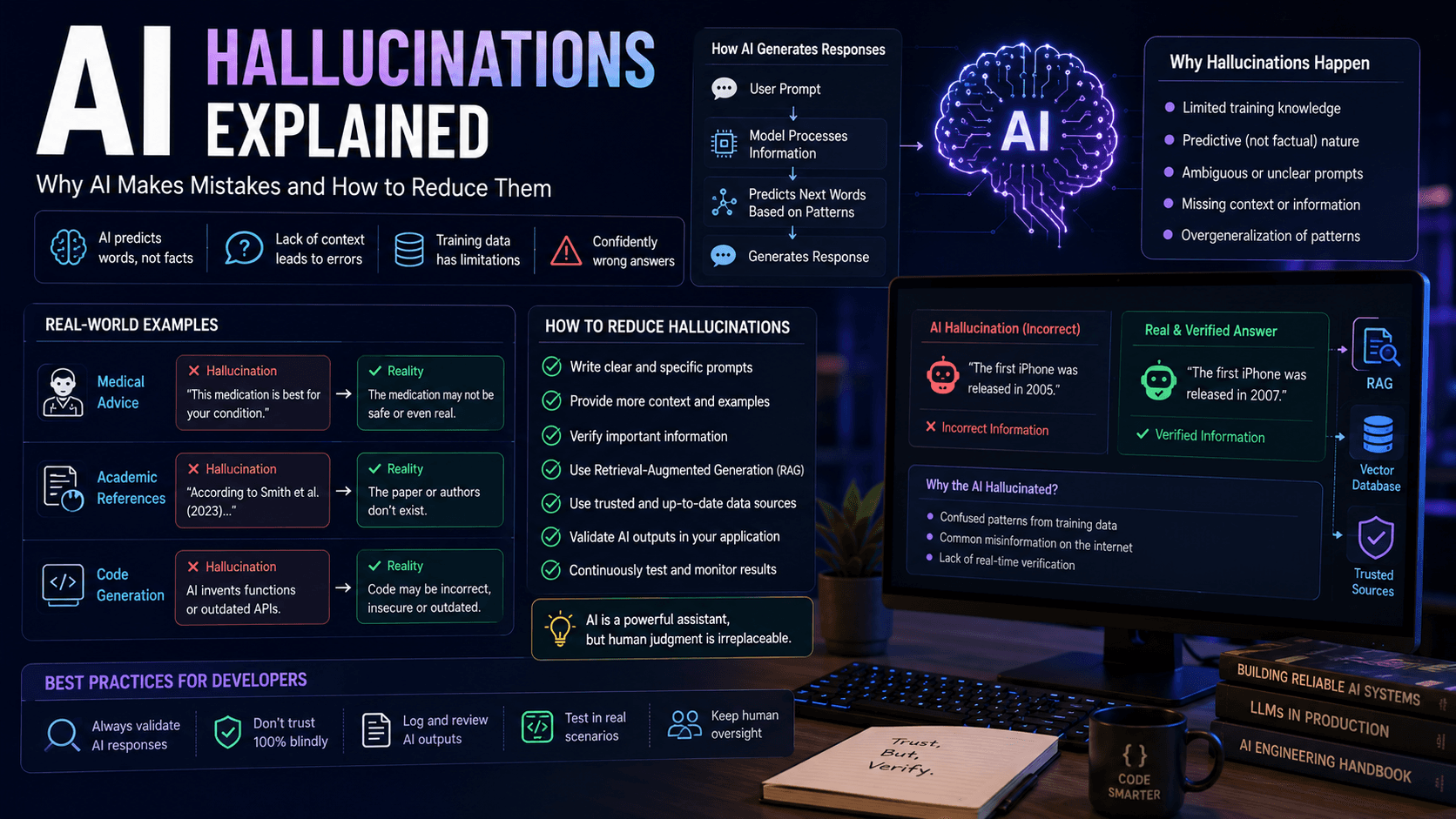
AI hallucinations are one of the biggest challenges in modern artificial intelligence. Discover why they happen, how they affect developers and businesses, and how to build more reliable AI systems.
Artificial Intelligence has become remarkably capable of answering questions, generating code, writing articles, and assisting with everyday tasks.
However, even the most advanced AI models sometimes produce information that sounds completely convincing—but is actually incorrect.
These incorrect responses are commonly known as AI hallucinations.
Understanding AI hallucinations is essential for developers, businesses, students, and anyone using AI-powered tools.
In this guide, you'll learn what AI hallucinations are, why they happen, real-world examples, and practical ways to reduce them when building AI applications.
What Are AI Hallucinations?
An AI hallucination occurs when a language model generates information that appears factual but is inaccurate, fabricated, or misleading.
Unlike humans, AI models don't "know" facts in the traditional sense.
Instead, they predict the most likely sequence of words based on patterns learned during training.
Sometimes that prediction is wrong.
Why Do AI Hallucinations Happen?
Several factors contribute to hallucinations.
Limited Training Knowledge
AI models only know what they learned during training.
They don't automatically know recent events or your private company data.
Predictive Nature
Large language models predict the next word rather than verifying facts.
This means they may confidently generate incorrect information.
Ambiguous Prompts
Vague prompts often lead to vague or inaccurate answers.
The more context you provide, the better the results.
Missing Context
Without enough information, the model fills in gaps using statistical predictions.
Real-World Examples
Imagine asking:
“"Who invented React in 2018?"
An AI might confidently generate an incorrect answer even though the question itself is flawed.
Another example:
A chatbot invents product features that don't exist.
Or an AI assistant generates fake references for a research paper.
These are classic hallucinations.
Why Hallucinations Matter
Incorrect AI responses can create serious problems.
Examples include:
- Incorrect medical advice
- Financial misinformation
- Legal inaccuracies
- Fake citations
- Software bugs
- Customer support errors
For businesses, inaccurate AI responses can reduce trust and damage user experience.
AI Hallucinations in Software Development
Developers frequently use AI to:
- Write code
- Generate documentation
- Debug applications
- Explain algorithms
Although AI is incredibly helpful, generated code isn't always correct.
Common issues include:
- Using outdated APIs
- Inventing library functions
- Incorrect syntax
- Security vulnerabilities
- Inefficient algorithms
Always review AI-generated code before using it in production.
Can Hallucinations Be Eliminated?
Not completely.
However, they can be significantly reduced.
Modern AI systems combine several techniques to improve accuracy.
How to Reduce AI Hallucinations
Use Better Prompts
Provide detailed instructions instead of asking vague questions.
Give More Context
Include relevant documentation or examples whenever possible.
Verify Responses
Never assume AI is always correct.
Cross-check important information.
Use Retrieval-Augmented Generation (RAG)
RAG allows AI models to retrieve trusted documents before generating answers.
Learn more:
Fine-Tune Carefully
Fine-tuning can improve performance for specific tasks but doesn't eliminate hallucinations.
How Companies Reduce Hallucinations
Leading AI products often combine:
- Vector databases
- Knowledge retrieval
- Human feedback
- Prompt engineering
- Output validation
- Tool calling
These approaches help AI generate more reliable responses.
Hallucinations vs AI Creativity
Not every unexpected answer is a hallucination.
Creative writing, storytelling, and brainstorming intentionally generate novel ideas.
Hallucinations become a problem when AI presents false information as factual.
Understanding the difference is important.
Best Practices for Developers
If you're building AI-powered software:
- Validate AI responses.
- Use trusted knowledge sources.
- Limit unsupported claims.
- Log AI outputs.
- Test prompts thoroughly.
- Monitor production performance.
These practices improve user trust and application quality.
Frequently Asked Questions
Are hallucinations bugs?
Not exactly.
They're a limitation of how language models generate text.
Which AI models hallucinate the least?
Modern models continue improving, but every large language model can hallucinate under certain conditions.
Does RAG eliminate hallucinations?
RAG significantly reduces hallucinations by providing relevant external information, but it cannot eliminate them entirely.
Should businesses trust AI?
Yes—but always include validation for important decisions.
Human oversight remains essential.
Further Reading
Expand your AI knowledge with these guides:
Final Thoughts
AI hallucinations are one of the biggest challenges in modern artificial intelligence.
Fortunately, developers now have access to powerful techniques such as prompt engineering, Retrieval-Augmented Generation (RAG), knowledge retrieval, and output validation that dramatically improve AI reliability.
Rather than avoiding AI because it isn't perfect, the better approach is understanding its limitations and designing applications that combine the speed of AI with trusted data and human oversight.
As AI continues to evolve, learning how to manage hallucinations will become an essential skill for developers, businesses, and anyone building intelligent applications.
Related Articles
More from the AI Tools category
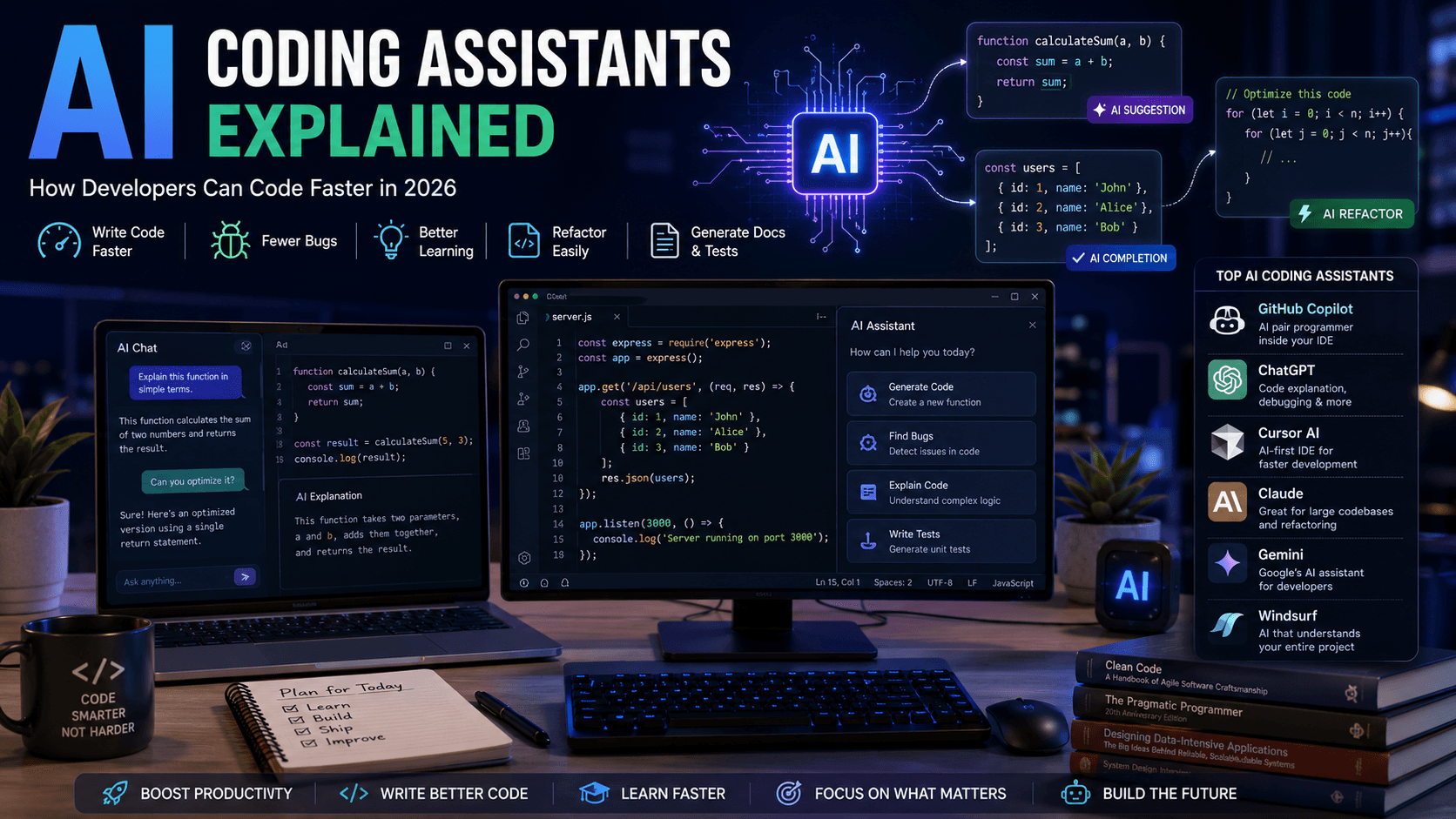
AI Coding Assistants Explained: How Developers Can Code Faster in 2026
AI coding assistants are transforming software development. Learn how they work, which tools to choose, and how they can improve your productivity in 2026.
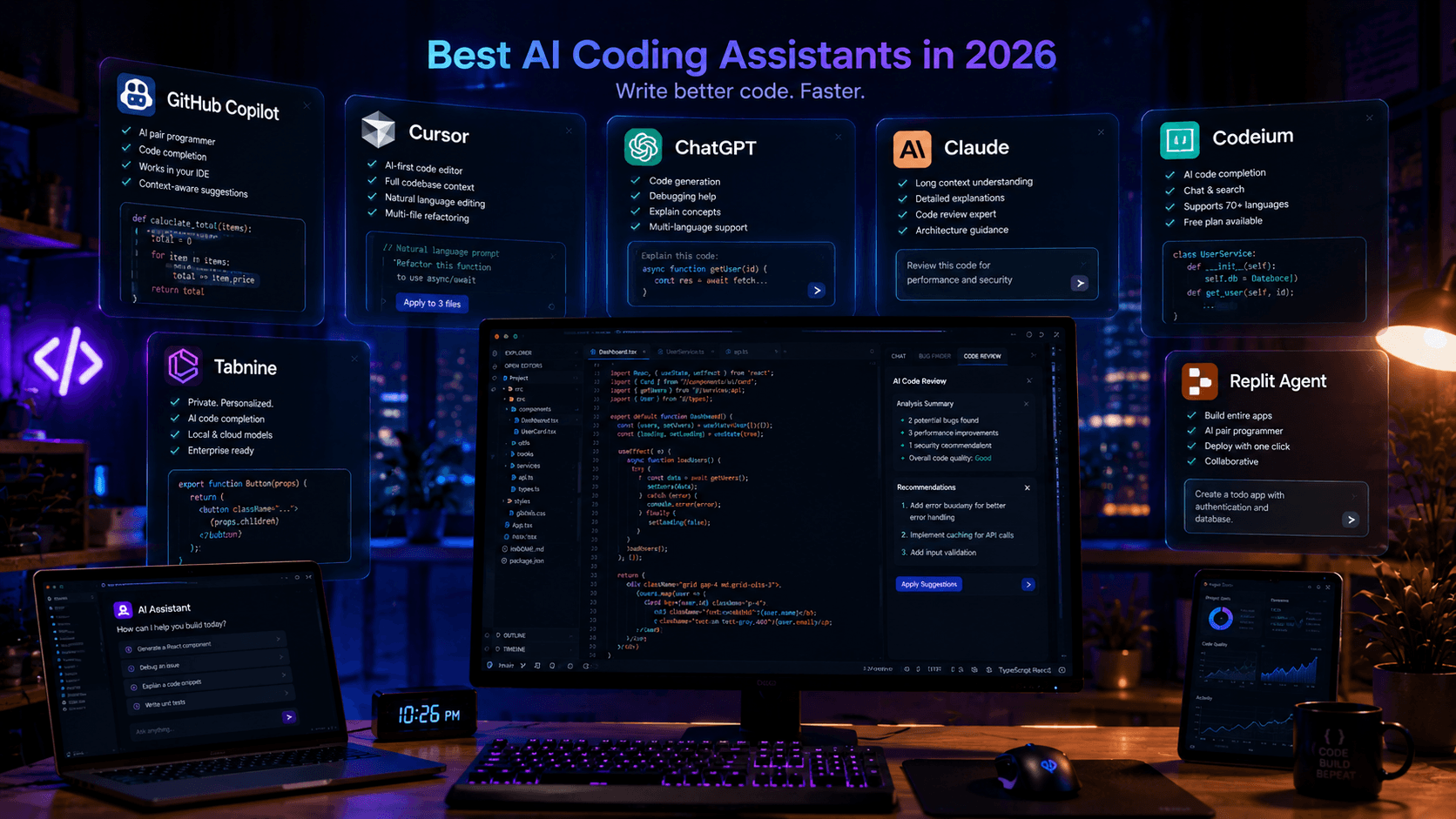
Best AI Coding Assistants in 2026: Complete Developer Guide
Looking for the best AI coding assistant? This guide compares the top AI tools for developers, including ChatGPT, Claude, Cursor, GitHub Copilot, and more.

Claude vs ChatGPT for Programming: Which AI Is Better for Developers in 2026?
Claude and ChatGPT are two of the most powerful AI tools available to developers. Learn which one performs better for coding, debugging, software architecture, and day-to-day development.